

Why Your Running Injury Keeps Coming Back (Even When You Rest)
There is a particular kind of frustration that many runners know all too well.
You start to notice a niggle.
Perhaps it’s your Achilles. Maybe your knee, hip or glute starts to feel uncomfortable during your runs.
So you do what seems like the sensible thing.
You stop running.
After a week or two, you feel better. Maybe even completely pain-free.
So you start running again.
The first few runs are fine.
Then you increase your distance or get back to your usual training, and suddenly…
The pain is back.
If this sounds familiar, you’re certainly not alone.
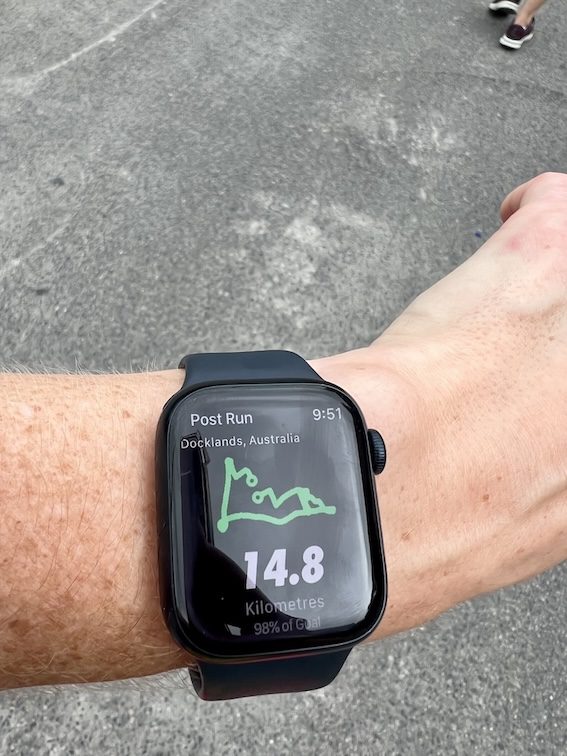
As I write this, I’m currently training for the Melbourne Marathon myself- my first ever full Marathon after doing a few half Marathons over the years. Thankfully, I’m not dealing with an injury at the moment, but I know how tempting it can be to push through a niggle when you’ve got a training plan, a race on the calendar and a goal you’re working towards.
And as osteopaths, we regularly see runners who find themselves caught in the same frustrating cycle:
Pain → Rest → Feel better → Return to running → Pain returns
So, why does this happen?
Often, the answer isn’t that rest “didn’t work”.
The problem is that rest may have allowed your symptoms to settle, without addressing the underlying factors that contributed to the problem in the first place.
Rest Can Help Your Symptoms Settle, But It Doesn’t Always Rebuild Your Capacity
Let’s imagine you regularly run 5 km without any problems.
You feel comfortable.
You don’t experience pain during your runs, and you’ve been doing this distance consistently for a while.
Then you decide you want to increase your running.
You run 6 km.
Then 7 km.
Then you try 8 or 10 km.
Suddenly, your Achilles, hip or knee starts to hurt.
You rest.
The pain settles.
You return to your 5 km runs, and everything feels fine again.
So you decide you’re ready to increase your distance.
But the same thing happens.
This is a pattern we see quite commonly in runners.
The problem isn’t necessarily that your body “can’t run”.
It’s that your current capacity may not yet match the demands you’re placing on it.
Your cardiovascular system might be capable of running 10 km.
Your motivation might be there.
Your lungs might feel fine.
But the tissues involved in running, including your muscles, tendons, joints and bones, also need to adapt to the increasing load.
Your body needs time and appropriate training to build that capacity.
This is one of the reasons why simply resting until your pain disappears doesn’t always prevent the problem from returning.
The “Feel Better, Then Flare Up Again” Cycle
One of the biggest traps runners can fall into is assuming that feeling better means they’re fully ready to return to their previous training load.
But pain and capacity aren’t always the same thing.
Imagine you’ve been experiencing Achilles pain.
You stop running for two weeks.
The pain settles.
That’s a positive sign.
But during those two weeks, you’ve also reduced the amount of load going through your Achilles tendon.
Your symptoms may have improved, but your capacity to tolerate running hasn’t necessarily increased.
If you then return immediately to the same distance, pace and frequency you were doing before the injury, you may be asking your body to handle a load it hasn’t had time to prepare for.
This is why we often talk about the difference between feeling better and being ready.
The goal isn’t simply to wait until your symptoms disappear.
The goal is to gradually rebuild your ability to tolerate the demands of running.
5 Reasons Your Running Injury May Keep Coming Back
1. You’re Returning to Running Too Quickly
This is one of the most common patterns we see.
You rest.
You feel better.
You start running again.
And because your symptoms have settled, you return to your previous distance or training schedule.
The problem is that your body may not yet be ready for that level of load.
A gradual return to running allows you to monitor how your body responds as you increase the demands placed on it.
This doesn’t necessarily mean you have to stop running completely.
Depending on the injury and your individual circumstances, it may be possible to modify your running while working on the factors contributing to your symptoms.
2. Your Strength and Conditioning Haven’t Caught Up
Running is a repetitive activity.
Every time your foot hits the ground, your body needs to absorb and produce force.
Your muscles and tendons need to tolerate repeated loading, often thousands of times during a single run.
If your running volume increases faster than your body’s capacity to tolerate that load, symptoms can develop.
This is where strength and conditioning can be an important part of rehabilitation.
For example, a runner recovering from Achilles pain may need to gradually rebuild calf strength and tendon capacity.
Someone experiencing gluteal tendon pain may need to work on strength and load tolerance around the hip.
The specific exercises will depend on the individual, but the underlying principle is similar:
Your body needs to be prepared for the activity you’re asking it to perform.
3. You’re Increasing Your Training Load Too Quickly
Sometimes the problem isn’t running itself.
It’s a sudden change in how much you’re asking your body to do.
This might happen when you:
- increase your weekly kilometres
- add an extra running day
- introduce intervals or speed work
- start running more hills
- increase your long run
- return to training after a break
- begin preparing for a race
These changes can all increase the demands placed on your body.
This is particularly relevant when training for events such as half marathons or marathons.
It’s easy to become focused on the number of kilometres in your training plan and forget that your body needs time to adapt.
Progressive training isn’t just about getting fitter.
It’s also about gradually preparing your body to tolerate the physical demands of your goal.
4. You’re Only Treating the Area That Hurts
When something hurts, it’s completely understandable to focus on that area.
If your Achilles hurts, you want to know what’s happening with your Achilles.
If your knee hurts, you want someone to look at your knee.
And of course, the painful area is important.
But as osteopaths, we also like to consider the bigger picture.
Running is a whole-body activity.
Your feet, ankles, knees, hips, pelvis, spine and upper body all contribute to how you move.
We may also consider factors such as:
- strength
- mobility
- movement patterns
- running volume
- training history
- recovery
- sleep
- work and lifestyle demands
This doesn’t mean that every running injury is caused by a problem somewhere else in the body.
Rather, we’re interested in understanding how the different parts of your body are working together and how you’re responding to the overall demands of your training.
Sometimes, the most useful information comes from looking beyond the exact spot that hurts.
5. You’re Returning to Your Old Training Load Instead of Your Current Capacity
This is particularly common after a period of rest.
Before your injury, you might have been comfortably running 10 km.
After several weeks off, you feel better and decide to return to your usual 10 km run.
But your body has changed during that time.
Your current capacity may be different from where it was before the injury.
This doesn’t mean you’ve lost everything.
It simply means you may need to rebuild gradually.
Think of it as meeting your body where it is now, rather than expecting it to immediately perform at the level it was performing before the injury.
Achilles and Gluteal Tendinopathy: Why These Injuries Can Be Particularly Frustrating
Tendon-related injuries are a good example of why the rest-and-return cycle can be so frustrating.
Achilles tendinopathy and gluteal tendinopathy can both be influenced by how much load a tendon is experiencing and how well it can tolerate that load.
Symptoms may settle when activity is reduced, only to return when the same demands are reintroduced.
This doesn’t necessarily mean that the tendon has been damaged again.
It may indicate that the tendon hasn’t yet developed enough capacity to tolerate the activity you’re asking it to perform.
This is why progressive rehabilitation is often an important part of managing tendon-related pain.
Depending on the individual, this may involve gradually increasing strength and loading exercises and modifying running or other activities while capacity is rebuilt.
For some persistent tendon presentations, shockwave therapy may also be considered as part of a broader management plan.
At Lifespan Osteopathy, we offer shockwave therapy in Essendon for appropriate musculoskeletal presentations. Whether it’s suitable will depend on your individual symptoms, diagnosis and overall circumstances.
You can learn more about Shockwave Therapy in Essendon on our website.
What About the Kinetic Chain?
You may have heard the term “kinetic chain” before.
Essentially, it refers to the way different parts of your body work together to produce and control movement.
When you run, you’re not just using your feet.
Your entire body is involved.
Your foot interacts with the ground.
Your ankle and calf help absorb and produce force.
Your knee and hip contribute to movement and stability.
Your pelvis and trunk help control your overall movement.
Even your upper body and arms contribute to running mechanics.
This is one reason why we don’t always want to focus solely on the painful area.
At Lifespan Osteopathy, we may look at how your whole body is moving and responding to the demands of running.
We may also consider your training program and how your running fits into your broader lifestyle.
For example, a runner who works on their feet all day and runs five times per week may have very different recovery needs from someone who works from home and runs three times per week.
Your body doesn’t experience your running program in isolation.
It’s responding to everything you ask it to do.
What Should You Do If Your Running Injury Keeps Coming Back?
If your injury keeps returning, it may be worth stepping back and asking a few questions.
How quickly did you return to running?
Did you gradually rebuild your running, or did you return to your previous distance as soon as you felt better?
Has your training load changed?
Have you recently increased your distance, speed, hills or frequency?
Is your strength keeping pace with your running?
Are you doing any strength and conditioning alongside your running?
Are you recovering adequately?
How are your sleep, nutrition, stress and other physical demands?
Are you addressing the bigger picture?
Have you considered how your overall movement, strength, training and lifestyle may be contributing?
These questions don’t provide a diagnosis, but they can help you start thinking beyond simply resting whenever pain appears.
How We Approach Recurring Running Injuries at Lifespan Osteopathy
When you come to see us about a running injury, we don’t just want to know where it hurts.
We want to understand the whole story.
This may involve looking at:
- your symptoms
- your running history
- your current training program
- recent changes in training load
- strength and conditioning
- recovery
- work and lifestyle demands
- movement throughout the whole body
We often use hands-on treatment where appropriate, but we also place a strong emphasis on rehabilitation and exercise.
Depending on your individual presentation, this might involve:
- modifying your current running load
- gradually rebuilding strength
- improving your capacity to tolerate running
- addressing relevant movement limitations
- developing a progressive return-to-running plan
The aim isn’t simply to get you back to the point where your pain settles.
It’s to help you understand what your body needs to tolerate the activities that matter to you.
For one runner, that might mean comfortably running 5 km.
For another, it might mean preparing for a half marathon.
For someone else, it might be getting back to marathon training.
Your goal matters.
When Should You See an Osteopath About a Running Injury?
If you’re experiencing pain that:
- keeps returning whenever you increase your running
- is gradually getting worse
- is changing the way you run
- is affecting your ability to train
- hasn’t improved despite modifying your activity
it may be worth having it assessed.
The earlier you understand what’s contributing to the problem, the more information you have to make decisions about your training and rehabilitation.
It’s also important to remember that not every running injury is appropriate for osteopathic management.
If your symptoms suggest a more serious injury or require further investigation, your osteopath may recommend assessment by your GP, sports physician or another appropriate healthcare professional.
Looking for a Sports Osteopath in Essendon?
Running injuries can be incredibly frustrating, particularly when you feel like you’ve already done the “right thing” by resting.
But if your symptoms keep returning, the answer may not simply be more rest.
Sometimes the key is understanding the gap between what your body can currently tolerate and what you’re asking it to do.
At Lifespan Osteopathy, we work with runners across Essendon, Moonee Ponds, Niddrie, Strathmore, Airport West and surrounding suburbs.
We take the time to understand your injury, your training and your goals, then develop an individualised approach that may include hands-on treatment, exercise rehabilitation and advice around training load and recovery.
Whether you’re a recreational runner heading out for a few kilometres each week or you’re training towards your next big event, we’re here to help you better understand your body and work towards getting back to the running you enjoy.
Give us a call on (03) 9372 7714, or book online today.