

Why Does My Baby Prefer Turning Their Head to One Side?
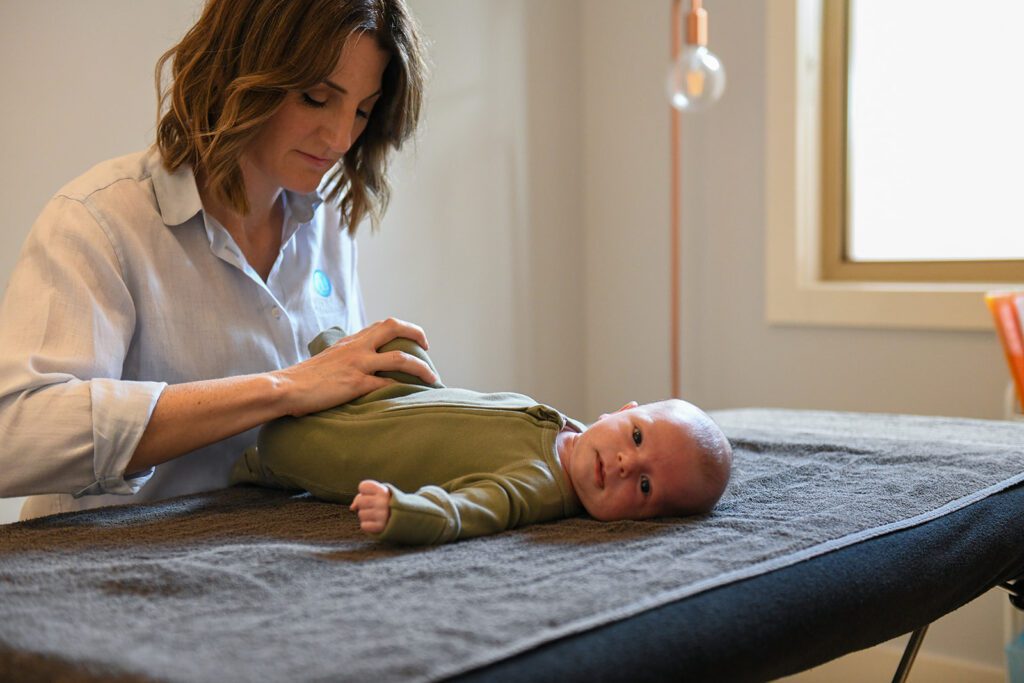
If you’ve noticed that your baby almost always seems to look to the left or right, you’re certainly not alone.
Many parents notice that their baby:
- sleeps with their head turned to one side
- feeds more comfortably on one breast than the other
- prefers looking one direction during tummy time
- develops a flattening on one side of their head
- becomes upset when encouraged to look the other way
Naturally, this can leave parents wondering whether it’s normal or whether they should be concerned.
The good news is that a preference for turning the head to one side is relatively common in young babies, and there are several possible reasons why it may occur.
1. Your Baby’s Position During Pregnancy
Babies spend many months curled up in a fairly small space.
Towards the end of pregnancy, particularly with first pregnancies, larger babies, twins, or breech presentations, babies can spend long periods in similar positions.
This may contribute to a preference for looking one direction after birth.
In many cases, parents notice this preference almost immediately.
You might find that your baby:
- always looks to the left or right while sleeping
- feeds more easily on one side
- seems more comfortable turning one direction
This doesn’t necessarily indicate a problem, but it can be useful information to discuss with your healthcare provider if the preference persists.
2. Tightness Through the Neck Muscles
Sometimes babies may have some tightness or restriction through the muscles of the neck.
One condition associated with this is called congenital muscular torticollis.
Babies with torticollis may:
- consistently prefer turning one way
- have difficulty looking equally in both directions
- develop a small head tilt
- become upset when encouraged to look towards the less preferred side
It’s important to remember that not every baby with a preferred side has torticollis.
However, if your baby is consistently avoiding one direction, it may be worth seeking assessment.
3. Babies Like Looking at Interesting Things
Sometimes the explanation is surprisingly simple.
Babies are naturally curious and love looking at:
- windows and natural light
- doors where family members appear
- favourite toys or mobiles
- siblings playing nearby
If all the interesting things happen to be on one side of the room, your baby may simply develop a habit of looking that way.
We often suggest parents observe:
- which direction their baby looks while in the bassinet
- where toys are positioned
- where parents usually approach from
Small environmental changes can sometimes make a big difference.
4. Feeding Positions Can Reinforce Preferences
Feeding positions can sometimes unintentionally reinforce a head turning preference.
For example, a baby who finds it easier to breastfeed on one side may naturally spend more time with their head turned in one direction.
Similarly, bottle feeding positions and preferred carrying positions may contribute to spending more time looking one way.
Again, this isn’t necessarily a problem in itself.
However, if you become aware of a rotation preference, it is often helpful to start to think about you and your baby’s routines, and observe if there are any things you do that may be contributing.
The goal is simply to encourage movement variety where possible.
5. Limited Tummy Time
Tummy time is one of the best opportunities babies have to strengthen their neck muscles and explore movement in different directions.
Babies who spend less time on their tummy may have fewer opportunities to develop this movement variety.
The good news is that tummy time doesn’t need to mean placing your baby flat on the floor for long periods.
Many parents find success with:
- tummy time on a parent’s chest
- short and frequent sessions
- using a rolled towel under baby’s chest for support
- incorporating tummy time into play
Little and often usually works best.
Why Does This Matter?
One reason healthcare professionals pay attention to head turning preferences is that prolonged pressure on one area of the skull can sometimes contribute to flattening of the head shape, known as positional plagiocephaly.
You may notice:
- flattening on one side of the back of the head
- one ear appearing slightly further forward
- a preference for sleeping on one side
Fortunately, many babies improve as they become more mobile and develop better head control.
You can read more about this in our article:
Why Does My Baby Have a Flat Spot on Their Head?
What Can Parents Try at Home?
Some simple strategies that may encourage movement variety include:
➡️ Position toys on the less preferred side
Interesting toys and faces are powerful motivators for babies.
➡️ Alternate feeding and carrying positions
This exposes your baby to slightly different positions throughout the day.
➡️ Rotate the cot or bassinet orientation
Many babies enjoy looking towards the doorway or source of activity in the room.
Changing their position in the room may encourage them to look the other way.
➡️ Encourage regular tummy time
Even a few minutes several times each day can be beneficial.
➡️ Continue to follow safe sleep recommendations
Babies should always be placed on their backs to sleep, even if they have a preferred side.
When Should You Seek Advice?
It may be worth speaking with your GP, Maternal and Child Health Nurse, paediatrician or paediatric osteopath if:
- your baby cannot comfortably turn equally both ways
- you notice a persistent head tilt
- a flat spot is developing
- feeding is difficult on one side
- the preference is becoming more noticeable over time
Early assessment often makes it easier to identify what may be contributing and provide appropriate advice.
How Can a Paediatric Osteopath Help?
At Lifespan Osteopathy, our paediatric osteopaths take an individualised approach to caring for babies and young children.
An assessment may include discussing:
- pregnancy and birth history
- feeding patterns
- sleeping habits
- developmental milestones
- movement preferences
Depending on your baby’s presentation, management may include low-force hands-on treatment where appropriate, positioning advice, tummy time suggestions, and education for parents.
We also regularly work alongside:
- Maternal and Child Health Nurses
- GPs
- Paediatricians
- Lactation Consultants
Our goal is always to support both your baby and your family.
Looking for a Paediatric Osteopath in Essendon?
If you’ve noticed your baby consistently prefers looking one way, you’re certainly not alone.
In many cases this simply reflects a temporary preference, but if you’re unsure or have concerns, having a conversation with an experienced healthcare professional can provide reassurance and guidance.
At Lifespan Osteopathy, Lauren and Shona have additional training and a particular interest in paediatric osteopathy and enjoy supporting local families from Essendon, Moonee Ponds, Strathmore, Niddrie, Airport West and surrounding suburbs.
Book online now, or call (03) 9372 7714 to speak to our team.
References: