

Why Work From Home Posture Pain Is So Common (And What Helps)

Work-From-Home Posture Pain:
If You’re an Essendon Desk Worker, This Might Sound Familiar
If you’re a desk worker in Essendon and you’ve noticed more neck stiffness, headaches, or lower back pain since working from home became normal, you’re not imagining it.
Raise your hand if any of these sound familiar:
- You open your laptop at the kitchen table “just for the morning”, then suddenly it’s 3pm and you haven’t really moved.
- Your neck feels tight by mid afternoon.
- You notice headaches creeping in more often than they used to.
- Your lower back feels stiff when you stand up after meetings.
- You tell yourself you should probably fix your setup… but work is busy, life is busy, and it just keeps getting pushed back.
At Lifespan Osteopathy in Essendon, this is a conversation we have with desk workers every single week. And honestly, most people are relieved when they realise they’re not the only one feeling this way.
“I Was Fine Before I Started Working From Home”
This is probably the most common sentence we hear.
Before 2020, many people had:
• Proper desk setups
• External monitors
• Supportive chairs
• Natural movement built into the day (walking to meetings, commuting, lunch breaks)
Then everything changed quickly.
And most home setups were never designed for full time desk work.
These days, we see many people working from:
• Dining tables
• Kitchen benches
• Sofas
• Beds
• Laptops with no external keyboard or screen
None of these automatically cause pain.
But when you combine them with long hours, stress, and less daily movement, work-from-home posture pain can slowly creep in. From our experience, there’s a few different phases of pain that desk workers go through.
The “I’ll Just Push Through” Phase
Most desk workers don’t come in when symptoms first start.
Usually it looks more like:
Week 1: “My neck feels a bit tight”
Month 2: “I’m getting more headaches”
Month 6: “My back feels stiff every morning”
Month 12: “I can’t sit comfortably for a full workday anymore”
The tricky part is that it often builds slowly enough that you adapt to it. Until one day you realise it’s affecting your sleep, your gym training, your running, or your ability to focus at work.
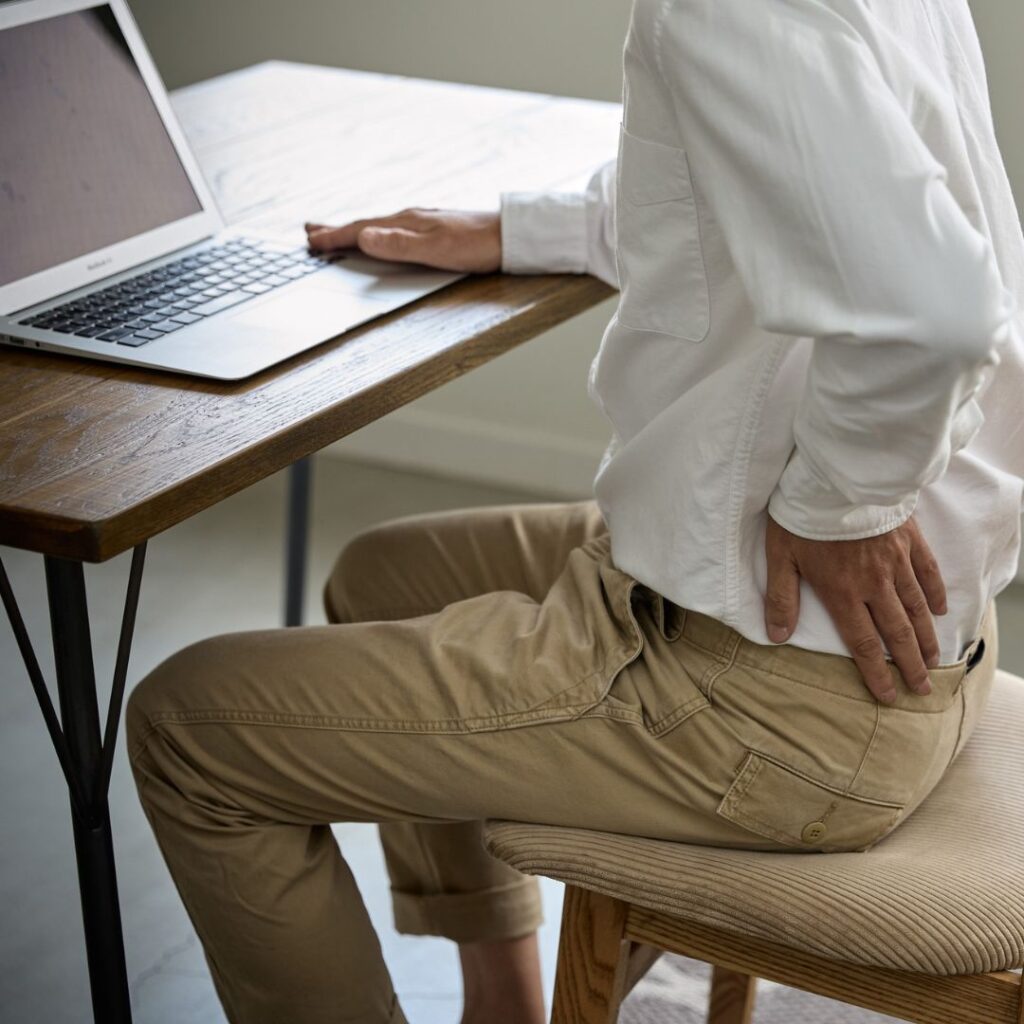
The Big Myth: Perfect Posture Fixes Everything
If you’ve ever Googled posture, you’ve probably seen images of people sitting perfectly upright with shoulders back and chin tucked.
Real life does not work like that.
The truth is that our body is designed to move. Not hold one position all day, even if that position looks “perfect”.
What we usually see is that people do best when they:
• Change positions regularly
• Feel physically supported in the positions they use most
• Build small movement breaks into their day
• Stay generally active outside work hours
The Pain Patterns We See Most In Desk Workers
Neck and Headaches
Often linked to screens sitting too low or laptops used without external screens.
Your head slowly drifts forward, and muscles at the back of the neck work overtime.
Upper Back and Shoulder Tightness
Very common when arms are unsupported or shoulders round forward toward a laptop.
Lower Back Pain
Often shows up when chairs don’t support the lower back well, or when people sit for long periods without moving.
If you’re thinking “yep, that’s me”- you’re definitely not alone.
Related: How To Manage Acute Back and Neck Pain
Why This Is Still So Common for Desk Workers
For a lot of desk workers in Essendon, working from home is no longer a temporary change, it’s just how work is now. Many people split time between home and office, or have fully remote roles that aren’t likely to change anytime soon.
What we’re seeing is that home work setups often stay in their “temporary” version for years.
People adapt to working off laptops, dining chairs, or flexible workspaces that change day to day. At the same time, workdays can be meeting heavy, which often means longer sitting blocks and fewer natural movement breaks.
When you combine long focused work periods, less incidental movement during the day, and work setups that aren’t always designed for full time desk work, it can mean the same areas of the body are under load for long stretches, day after day.
Over time, that’s when work from home posture pain tends to show up or hang around.

The Good News: These 4 Small Changes Usually Matter More Than Big Ones
You don’t need a perfect home office.
You don’t need to buy the most expensive chair on the market. Even the “best” chair is limited by how well and how long you sit in it.
You also don’t need to sit perfectly straight all day.
Often, the most helpful starting points are simple and realistic.
1.Raise Your Screen
If your screen is closer to eye level, your neck usually doesn’t have to work as hard.
2. Support Your Lower Back
A towel roll or cushion can help more than most people expect.
3. Set Movement Reminders
Standing up every 30 to 60 minutes can make a big difference over a full week.
4. Change Positions When You Can
Sitting, standing, walking calls, even working at the bench for short periods can help.
When It Might Be Time To Get Some Help
If work-from-home posture pain is starting to:
• Affect your sleep
• Stop you training or exercising how you want
• Make workdays feel harder than they should
• Feel like it’s slowly getting worse
It can be really helpful to have someone look at the full picture, not just where it hurts, but how you work, move, and recover.
Related: Improve Your Sleep and Reduce Pain: How to Choose the Right Mattress
How Osteopathy Often Fits Into This
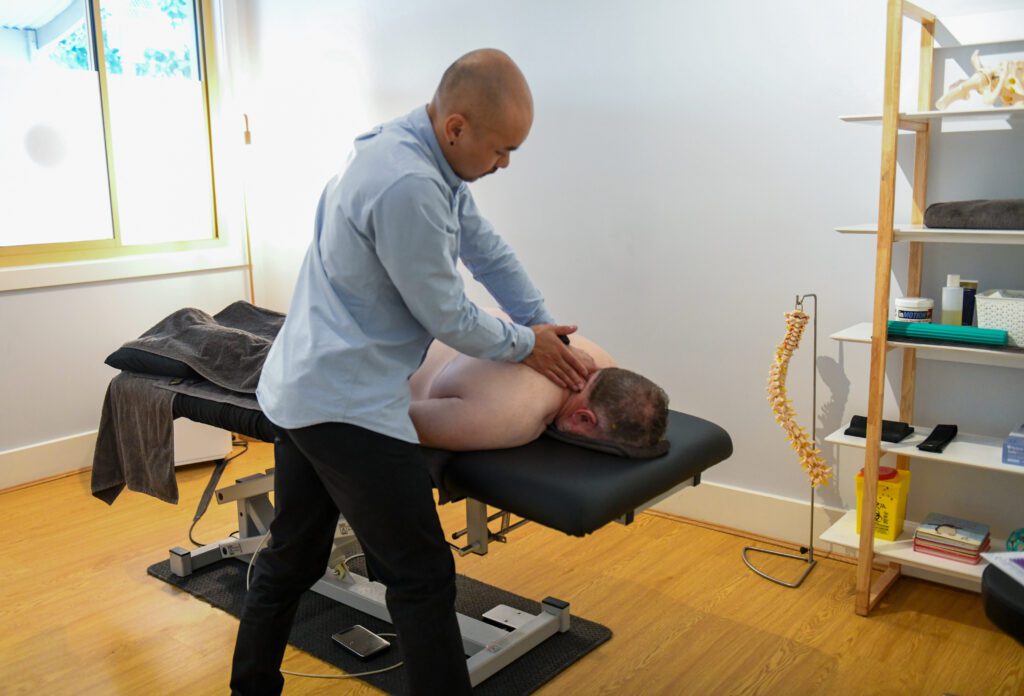
For desk workers, support often includes a mix of:
• Hands on treatment
• Individual exercise plans
• Practical workstation suggestions
• Education around load and movement habits
The focus is always on helping you feel more comfortable and more confident in your day to day life, not chasing perfect posture.
The Reality Most People Need To Hear
You don’t need a Pinterest perfect home office.
You don’t need to stretch every hour on the hour.
You don’t need to “sit properly” all day.
You do need a setup and plan that works for your real life, your real job, and your real home environment.
If This Sounds Like You
If you’re a desk worker dealing with work-from-home posture pain, you’re very much not alone. And you’re not “doing it wrong”.
Sometimes the most helpful first step is just understanding what’s driving your symptoms and what small changes are likely to give you the biggest return.
From there, you can build something that actually feels sustainable long term, not something you’ll abandon after two weeks.
Our Osteopaths are well trained in ergonomics, as well as a full range of musculoskeletal conditions. If you’re struggling with pain that you think is related to working from home, give us a call on (03) 9372 7714, or book online now.